임질
gonorrhea)에 의함
많다. 그러나 증상이 생기면 대개 10일 내에 발생.
N. gonorrhoeae (the
“gonococcus”)
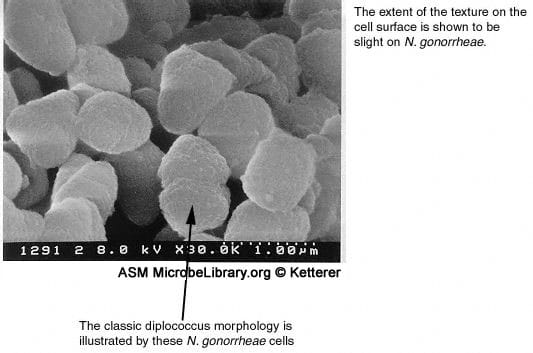
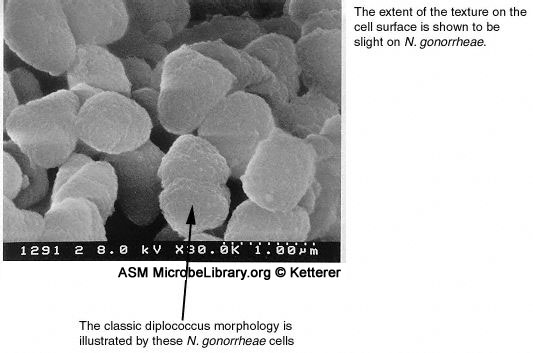
N. gonorrhoeae (figure
20 and 21),
found only in man, is the causative agent of gonorrhea, the second most common
venereal disease. The organism often causes an effusion of polymorphonuclear
cells. A smear (figure 17, 18, 19) may show the presence of Gram negative cocci (diplococci) present in cells.
However, culture is essential for definitive diagnosis.
A common feature of disseminated
gonoccocal disease is arthritis. Although commonly considered a form of septic
arthritis, in many cases gonococci cannot be isolated from the joint (i.e. they
are “reactive” in nature). Dermatitis is also common.
Penicillin therapy is still usually
effective. However, resistant strains producing beta lactamases are
sufficiently common that alternatives are recommended for all gonococcal
infections; this includes ceftriaxone (a beta lactamase-resistant
cephalosporin). There is no vaccine since strains are highly variable in their
external antigens (both outer membrane and pili). Both are involved in the
initial adhesion of the organism to genital epithelium.
IgA proteases (also produced by N.
meningitidis) are involved in successful colonization. As for many other
bacterial infections, a role for both the lipopolysaccharide and peptidoglycan in
tissue injury have been suggested. Exotoxins are not believed to be of
importance in pathogenesis.